
Blackjack, also known as 21, is one of the most popular and well-known card games in the world. It is a game of chance and strategy that has been played in casinos and at home for centuries. The objective of the game is simple – to have a hand that is worth more than the dealer’s hand, without exceeding 21. However, the game also involves complex decisions and betting strategies that can make it both challenging and exciting. In this game, players must use their knowledge of probability, basic math, and strategy to outsmart the dealer and win big. Whether you are a seasoned gambler or just starting out, Blackjack is a game that offers endless opportunities for entertainment and potential profit.
The History of Blackjack
The origins of Blackjack are not entirely clear, but the game is believed to have evolved from several different card games that were popular in Europe during the 17th and 18th centuries. The game was originally known as “Vingt-et-Un,” which is French for “21.”
The game gained popularity in the United States during the 19th century, and the name “Blackjack” was coined due to the bonus that was offered for any hand that included the Ace of Spades and a Jack of either Spades or Clubs.
During the early 20th century, the game became even more popular as it was introduced to Las Vegas and other casinos around the world. It was also during this time that the game’s rules were standardized, including the use of a 52-card deck and the requirement that the dealer must hit on a hand value of 16 or less.
Today, Blackjack remains one of the most popular casino games in the world, with millions of players enjoying the game both in land-based and online casinos. The game has also inspired numerous variations, including Spanish 21, Pontoon, and Blackjack Switch, among others.
How to play Blackjack?
To play Blackjack, follow these basic steps:
- First, place your bet on the table within the designated betting area.
- The dealer will then deal two cards to each player, including themselves. Both of your cards will be dealt face up, while one of the dealer’s cards will be dealt face down.
- Add up the value of your cards. Number cards are worth their face value, face cards (Jacks, Queens, Kings) are worth 10, and Aces can be worth either 1 or 11, depending on which value would be more advantageous for your hand.
- Decide whether to “hit” (take another card) or “stand” (keep your current hand). You can continue to hit until you are satisfied with your hand or until you “bust” (go over 21).
- Once all players have finished making their decisions, the dealer will reveal their face-down card and continue to hit until their hand is worth 17 or more.
- If your hand is closer to 21 than the dealer’s hand, you win and receive a payout of 1:1. If the dealer’s hand is closer to 21, you lose your bet.
- If your initial two cards are an Ace and a card worth 10, you have a “Blackjack” and win 1.5 times your bet, unless the dealer also has a Blackjack, in which case the hand is a tie (a “push”).
These are the basic rules of Blackjack. However, there are many variations of the game with slightly different rules, so it’s always a good idea to familiarize yourself with the specific rules of the game you are playing.
Blackjack Rules
Blackjack is a casino card game with simple rules, but it requires a strategy to win. The game is played with one or more decks of 52 cards, and the objective is to beat the dealer by having a hand value of 21 or as close to 21 as possible without going over.
There are several rules to keep in mind when playing Blackjack. Here are some of the most important ones:
Card Values
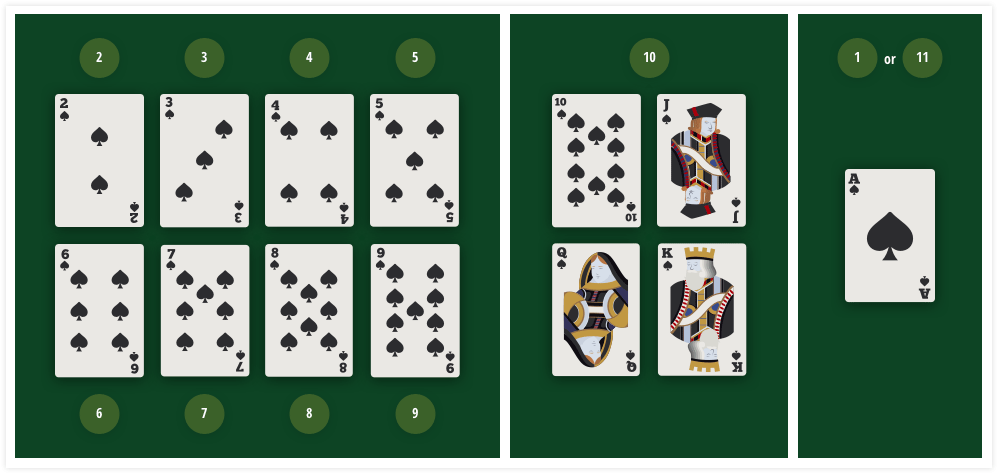
In Blackjack, the card values are as follows: number cards are worth their face value, face cards (Jacks, Queens, Kings) are worth 10, and Aces can be worth either 1 or 11. The value of an Ace is determined by which value would be more advantageous for your hand.
Hit or Stand
After receiving their initial two cards, players can choose to “hit” (receive another card) or “stand” (keep their current hand). Players can continue to hit until they are satisfied with their hand or until they “bust” (go over 21).
Dealer Rules
The dealer must hit on a hand value of 16 or less and must stand on a hand value of 17 or more. If the dealer’s hand is closer to 21 than the player’s hand, the player loses their bet. If the player’s hand is closer to 21, they win their bet. And If the player and the dealer have the same hand value, it’s a tie (a “push”).
Doubling Down
Players can choose to “double down” after receiving their initial two cards. This involves doubling their original bet and receiving one additional card. After doubling down, the player must stand.
Splitting
If a player’s initial two cards are of the same value (e.g., two 7s), they can choose to “split” them into two separate hands. The player must place an additional bet equal to their original bet, and each hand is then played separately.
Insurance
If the dealer’s face-up card is an Ace, players have the option to take “insurance” by placing an additional bet equal to half of their original bet. If the dealer has Blackjack, the player wins their insurance bet, but if the dealer does not have Blackjack, the player loses their insurance bet.
Blackjack Variants
Blackjack is a popular casino card game that has been played for centuries, and there are many different variations of the game. Each variant has its own set of rules and strategies, making them unique and challenging in their own way. Here are some of the most popular variants of blackjack:
Spanish 21
Spanish 21 is a popular variant of the traditional game of blackjack that is played with a deck of 48 cards, instead of the standard 52 cards used in most blackjack games. The four tens (10s) are removed from the deck, leaving only 9s, face cards (jacks, queens, and kings) and aces. The game is popular in many parts of the world, including the United States, Canada, and Australia.
The main objective of Spanish 21 is the same as in traditional blackjack – to beat the dealer by getting a hand that is as close to 21 as possible without going over. However, there are a number of differences between Spanish 21 and traditional blackjack that make the game more exciting and challenging.
One of the key features of Spanish 21 is that it offers players a variety of bonus payouts for certain hands. For example, a player who gets a hand of 21 made up of five or more cards receives a bonus payout. There are also bonus payouts for certain combinations of cards, such as a 7-7-7 or a 6-7-8 of the same suit.
Pontoon
Pontoon is a popular variant of the traditional game of blackjack that is played in many parts of the world, including the United Kingdom, Australia, and Asia. The game is similar to blackjack in many ways, but there are some important differences that make it unique.
One of the main differences between pontoon and traditional blackjack is that the dealer’s cards are dealt face down in pontoon, so players do not know the dealer’s hand until the end of the round. This can make the game more challenging and exciting, as players must rely on their intuition and strategy to make their decisions.
Pontoon also has some unique rules for how hands are played. For example, players must twist (take another card) if their hand totals 14 or less, and they can stick (not take any more cards) on hands totaling 15 or more. Players can also split their hands up to two times and can double down on any hand, not just the first two cards as in traditional blackjack. Finally, pontoon features different payouts than traditional blackjack. For example, a pontoon pays out at 2:1, while a five card trick pays out at 2:1 or 3:1, depending on the rules of the casino.
Double Exposure Blackjack
Double Exposure Blackjack is a popular variant of the traditional game of blackjack that is played in many land-based and online casinos. The game is also called “Dealer Disclosure” or “Face Up 21”, as both of the dealer’s cards are dealt face up.
The main objective of Double Exposure Blackjack is the same as in traditional blackjack – to beat the dealer by getting a hand that is as close to 21 as possible without going over. However, because both of the dealer’s cards are face up, players have more information to work with when making their decisions.
One of the key differences between Double Exposure Blackjack and traditional blackjack is that the dealer wins all ties except for a tied blackjack, which is a push. This gives the dealer a slightly higher advantage. But the fact that both of the dealer’s cards are exposed can help players make more informed decisions.
Another unique feature of Double Exposure Blackjack is that players are only allowed to split their hands once. Additionally, players can only double down on the first two cards, and cannot double down after splitting their hand.
European Blackjack
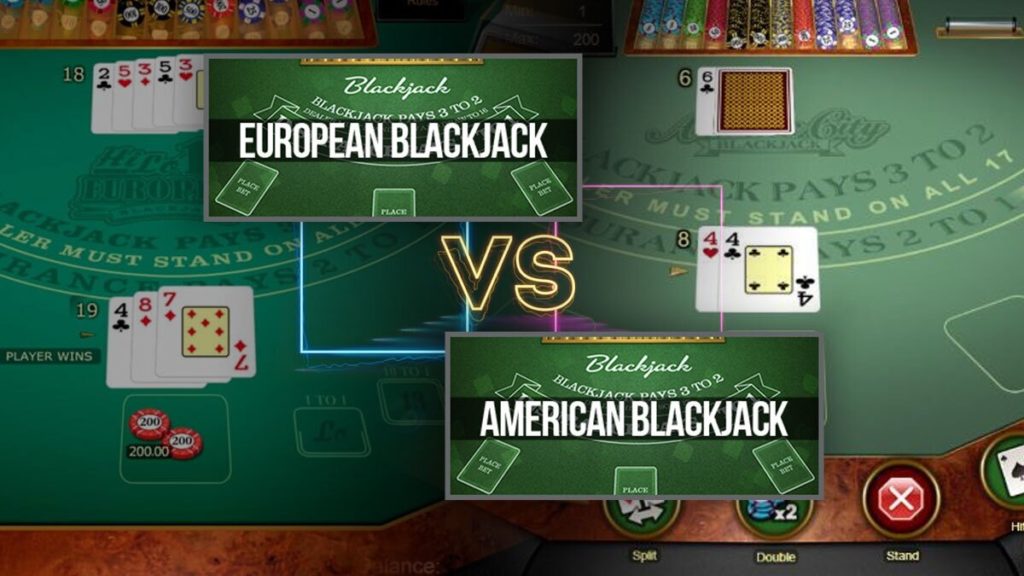
European Blackjack is a popular variant of the traditional game of blackjack that is commonly played in casinos throughout Europe and online. The game is similar to traditional blackjack, but there are some important differences in the rules that make it unique.
One of the main differences between European Blackjack and traditional blackjack is that in European Blackjack, the dealer only receives one card face up at the beginning of the round, instead of two. The dealer does not receive a second card until all the players have finished their turns.
Another important difference is that in European Blackjack, players are not allowed to surrender their hand. This means that if a player has a weak hand, they must either stand, hit, or double down to try to improve their hand.
European Blackjack also has some unique rules for how hands are played. For example, players must stand on hands totaling 17 or higher, including soft 17 (a hand that includes an ace that can be counted as either 1 or 11). Additionally, players are only allowed to split their hands once, and they can only double down on hands that total 9, 10, or 11.
American Blackjack
American Blackjack is a popular variant of the classic game of Blackjack, also known as “21”. The game is played with a standard deck of 52 cards and is similar to other blackjack variants, with a few key differences.
In American Blackjack, the dealer is dealt two cards, one face up and one face down. While the player is dealt two cards face up. The dealer peeks at their face-down card to check for a natural blackjack before the player makes any decisions.
If the dealer has a natural blackjack, the game ends immediately, and the player loses their bet. If the dealer does not have a natural blackjack, the player has several options to choose from. Including hitting, standing, doubling down, or splitting pairs.
Another significant difference in American Blackjack is the use of a hole card. The dealer’s face-down card is referred to as the “hole card,” and it is not revealed until all players have completed their hands. This means that players do not know whether the dealer has a natural blackjack or not until the end of the round.
Tips for playing Blackjack
Blackjack is a game of chance and strategy, and there are many tips and tricks that can help players improve their chances of winning. Here are some tips for playing Blackjack:
- Learn basic strategy: Basic strategy involves understanding the best possible moves for any given hand, based on the dealer’s face-up card. There are many charts and resources available online that can help you learn basic strategy.
- Manage your bankroll: It’s important to set a budget for how much you’re willing to spend, and stick to it. Don’t chase your losses and never bet more than you can afford to lose.
- Avoid insurance bets: Insurance bets are side bets that are offered when the dealer has an ace showing. While they may seem tempting, they have a high house edge and are generally not worth it.
- Practice card counting: Card counting is a strategy where you keep track of the cards that have been played to predict which cards are more likely to be dealt next. While card counting is not allowed in most casinos, it can still be a useful skill to have.
- Avoid playing at crowded tables: Playing at a crowded table can slow down the game and make it difficult to keep track of the cards. Try to play at tables with fewer players.
- Don’t drink too much: Drinking can impair your judgment and lead to poor decision-making at the table. Limit your alcohol intake while playing.
- Take breaks: It’s important to take breaks and step away from the table every once in a while. This can help you stay focused and make better decisions.
Blackjack Strategies
Blackjack is a game that requires both luck and skill. While luck determines the cards you are dealt, skill comes into play when deciding when to hit, stand, double down, or split. There are various blackjack strategies that players can use to increase their chances of winning at Blackjack. Here are some of the most popular Blackjack strategies:
Basic Strategy
Mastering the basic strategy is fundamental to all Blackjack strategies, and it is crucial for players to grasp its concepts. Essentially, the basic strategy entails understanding the appropriate times to hit, stand, double down, or split based on the player’s hand and the dealer’s up card. Implementing the basic strategy can substantially reduce the house edge to as low as 0.5%, which is an effective way to increase the chances of winning at Blackjack.
Card Counting
Card counting is a technique that entails keeping track of the cards that have already been played in an effort to predict the likelihood of certain cards being dealt in the future. This strategy enables players to adjust their bets and playing decisions based on whether the remaining cards are favorable or unfavorable to their hand. While card counting is not illegal, it is generally discouraged by casinos, and players need to exercise caution to avoid detection.
Progressive Betting
The progressive betting strategy involves a player gradually increasing their betting amount following a win, and decreasing it after a loss. The aim of this strategy is to maximize profits during winning streaks while minimizing losses during losing ones. Some players opt for doubling their bet size after each win. While others adopt a more cautious approach by increasing their bet size by a smaller percentage.
Shuffle Tracking
Shuffle tracking is a skillful technique that involves tracing the movements of particular cards as they are shuffled and cut. This approach enables players to anticipate the timing of specific card deals and adjust their playing decisions accordingly. Shuffle tracking demands a great deal of focus and expertise, and it is often used alongside card counting to amplify players’ advantage over the casino.
Wonging
Wonging is a blackjack strategy that was popularized by blackjack expert Stanford Wong. The technique involves observing a blackjack game from afar, waiting for a favorable count to occur, and then joining the game to take advantage of the favorable odds. The idea behind Wonging is that by not playing during unfavorable conditions, players can preserve their bankroll and reduce their risk of losing. By only joining a game when the count is in their favor, players can increase their chances of winning while minimizing their losses.
The Future of Blackjack
The future of blackjack is largely dependent on technological advancements and changing player preferences. Advancements in virtual and augmented reality could revolutionize the way we play casino games. While the increasing popularity of online and mobile gaming means that casinos will need to adapt and offer a seamless and secure gaming experience. Live dealer games are also becoming increasingly popular, allowing players to experience the excitement of a real casino from the comfort of their own home. Some casinos are also exploring the idea of skill-based blackjack games, which could appeal to younger players looking for a more engaging and interactive gaming experience. While the basic rules of the game will likely remain the same, we can expect to see new and innovative ways of playing blackjack in the years to come.
FAQ
Conclusion
Blackjack is a classic casino game that has been enjoyed by players for generations. With simple rules, a low house edge, and the potential for big payouts, it’s no wonder why blackjack remains a popular choice for players around the world. While luck certainly plays a role in the game, skill and strategy can also significantly improve your chances of winning. Whether you prefer to play in a traditional casino setting or online, blackjack offers a thrilling and exciting gaming experience that is sure to keep you entertained for hours.